
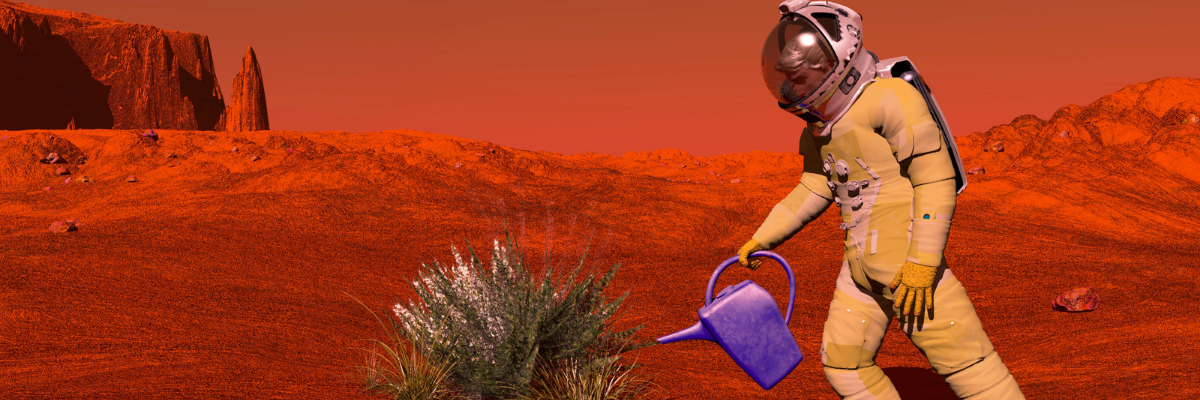
Ever looked up at the red planet and wondered if we could actually live there? It’s a dream that’s fueled science fiction for decades, but it’s also becoming an increasingly serious topic for scientists and engineers. The idea of setting up a permanent human presence on Mars is exciting, but it’s also fraught with challenges. Let’s dive into what it would really take to make Mars our second home.
Why Mars? What’s the Big Deal?
Okay, so why not the Moon, or Venus, or just stay here on Earth? Mars has a few key advantages that make it a prime candidate for colonization:
- Water Ice: We know there’s water ice on Mars, mostly at the poles. Water is crucial for drinking, growing food, producing oxygen, and making rocket fuel. This is a huge deal because transporting water from Earth would be incredibly expensive and difficult.
- Day Length: A Martian day (called a "sol") is only about 40 minutes longer than an Earth day. This makes it easier for us to adjust our circadian rhythms and maintain a normal work/sleep schedule. No more permanent jet lag!
- Sunlight: Mars receives enough sunlight to potentially grow plants, especially with the help of greenhouses or artificial lighting. This is essential for creating a sustainable food supply.
- Relatively "Close": While still a massive distance, Mars is the closest potentially habitable planet to Earth. This reduces travel time and the associated risks.
The Harsh Reality: Mars Isn’t Exactly a Vacation Spot
Let’s not sugarcoat it: Mars is a tough place to live. Here are some of the biggest obstacles we’d face:
- Thin Atmosphere: The Martian atmosphere is only about 1% as dense as Earth’s. This means it’s extremely difficult to breathe (it’s mostly carbon dioxide anyway), offers almost no protection from radiation, and can’t trap heat very well.
- Extreme Temperatures: Mars is cold. Really cold. Average temperatures are around -62 degrees Celsius (-80 degrees Fahrenheit). Temperatures can fluctuate wildly between day and night.
- Radiation: Without a thick atmosphere or a global magnetic field like Earth’s, Mars is bombarded with harmful radiation from the sun and cosmic rays. This significantly increases the risk of cancer and other health problems.
- Toxic Soil: Martian soil contains perchlorates, which are harmful to humans. These chemicals would need to be removed or neutralized before we could grow food in the Martian soil.
- Dust Storms: Mars is prone to planet-wide dust storms that can last for weeks or even months. These storms can block sunlight, damage equipment, and pose a serious hazard to astronauts.
So, How Do We Overcome These Challenges? The Martian To-Do List
Making Mars habitable is a monumental undertaking. Here’s a glimpse at some of the solutions being explored:
- Habitats: We’d need to build pressurized habitats to protect ourselves from the thin atmosphere, extreme temperatures, and radiation. These habitats could be built using Martian materials, like regolith (Martian soil), or prefabricated modules sent from Earth. Inflatable habitats are also a promising option.
- Life Support Systems: These systems would recycle air and water, generate oxygen, and remove carbon dioxide. Closed-loop systems, which recycle almost everything, are the ultimate goal for long-term sustainability.
- Radiation Shielding: Various strategies are being considered to shield habitats from radiation. Burying habitats underground, using water ice as shielding, or developing advanced radiation-resistant materials are all possibilities.
- Food Production: Growing food on Mars is essential for long-term survival. Greenhouses or indoor farms could be used to cultivate crops. Research is underway to develop crops that are tolerant to Martian soil and climate conditions.
- Water Extraction: Extracting water from Martian ice deposits would be crucial for drinking, growing food, and producing rocket fuel. Technologies for extracting water from ice are being developed and tested.
- Power Generation: A reliable power source is essential for all aspects of Martian life. Solar power, nuclear power, and geothermal energy are all being considered.
- Resource Utilization (ISRU): Using Martian resources to produce things we need, like building materials, fuel, and oxygen, is crucial for reducing our dependence on Earth. This is known as In-Situ Resource Utilization (ISRU).
- Mental Health: Living in a confined space, far from Earth, for extended periods can take a toll on mental health. Psychological support, social activities, and virtual reality technology could help astronauts cope with the challenges of isolation.
Terraforming: Turning Mars into Earth 2.0?
Terraforming is the hypothetical process of modifying a planet’s atmosphere, temperature, surface topography, and ecology to be similar to Earth’s environment, so that humans and other Earth-based life can survive without needing life support systems.
While it’s a long-term goal, terraforming Mars is an incredibly complex and challenging undertaking. Some ideas include:
- Releasing Greenhouse Gases: Introducing greenhouse gases into the Martian atmosphere could trap heat and warm the planet. This could be done by vaporizing frozen carbon dioxide or releasing manufactured greenhouse gases.
- Building a Magnetic Field: Creating an artificial magnetic field around Mars could protect the planet from solar wind and cosmic radiation. This is a very ambitious and technically challenging idea.
- Introducing Photosynthetic Organisms: Introducing photosynthetic organisms, like algae or bacteria, could convert carbon dioxide into oxygen and gradually thicken the atmosphere.
Terraforming Mars could take centuries, or even millennia, to achieve. It’s more of a long-term vision than a near-term solution.
The Human Factor: Are We Ready for the Martian Challenge?
Beyond the technological challenges, there are also significant human factors to consider:
- Physical Health: Extended exposure to radiation, reduced gravity, and isolation can have detrimental effects on physical health. Regular exercise, specialized diets, and medical care would be essential.
- Psychological Health: Living in a confined space, far from Earth, for extended periods can take a toll on mental health. Psychological support, social activities, and virtual reality technology could help astronauts cope with the challenges of isolation.
- Team Dynamics: Selecting a crew that can work together effectively under stressful conditions is crucial. Training in teamwork, conflict resolution, and crisis management would be essential.
- Ethical Considerations: Colonizing Mars raises ethical questions about planetary protection, resource utilization, and the potential impact on any existing Martian life (if it exists).
The Cost of the Dream: Can We Afford to Go to Mars?
The cost of sending humans to Mars is astronomical. Estimates range from hundreds of billions to trillions of dollars. This raises the question of whether the potential benefits of Martian colonization justify the enormous expense.
However, proponents argue that the investment in Mars exploration could lead to technological breakthroughs that benefit humanity in many ways, such as:
- New Technologies: Developing the technologies needed to survive on Mars could lead to innovations in areas like robotics, materials science, energy production, and medicine.
- Scientific Discoveries: Studying Mars could provide valuable insights into the formation and evolution of planets, the search for life beyond Earth, and the future of our own planet.
- Inspiration and Education: The prospect of colonizing Mars can inspire young people to pursue careers in science, technology, engineering, and mathematics (STEM).
Frequently Asked Questions (FAQ)
- Can we breathe on Mars? No, the Martian atmosphere is too thin and composed mostly of carbon dioxide. We would need pressurized habitats or spacesuits.
- Is there water on Mars? Yes, mostly in the form of ice at the poles and in subsurface deposits.
- How long does it take to get to Mars? A one-way trip to Mars takes about six to nine months.
- Is Mars habitable? Not without significant modifications. We need habitats, life support systems, and protection from radiation.
- Will we find life on Mars? It’s possible, but we haven’t found definitive evidence yet. The search for past or present microbial life is a major focus of Mars exploration.
The Future is Red…Potentially!
Living on Mars is still a long way off, but the progress being made in space technology and our understanding of the red planet is truly remarkable. While there are huge hurdles to overcome, the dream of becoming a multi-planetary species is within reach. It’s a challenging, expensive, and ethically complex endeavor, but the potential rewards – scientific discoveries, technological advancements, and the expansion of human civilization – could be transformative. The journey to Mars is a journey for all of humanity.