
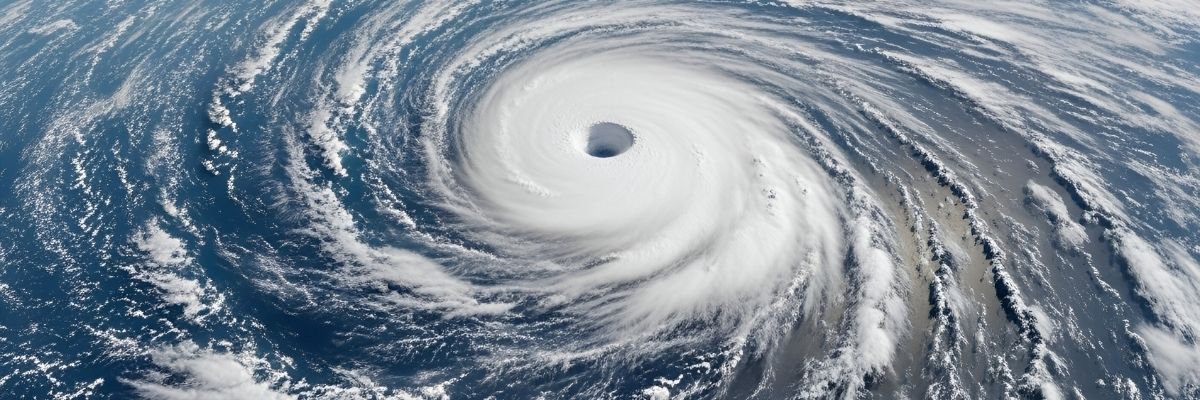
Ever looked up at the sky and wondered if those swirling clouds are unique to Earth? Well, get ready to expand your cosmic horizons! Our planet isn’t the only one with weather; in fact, the solar system is teeming with fascinating, and sometimes terrifying, weather phenomena. Understanding these alien weather patterns not only reveals more about the planets themselves but also helps us better understand our own climate and how it might change in the future.
Forget Sunshine and Rainbows: What’s Alien Weather Really Like?
When we think of weather, we often imagine sunshine, rain, and maybe a thunderstorm. But planetary weather systems beyond Earth are often far more extreme and exotic. The conditions on other planets are dictated by factors like their atmospheric composition, rotation rate, distance from the sun, and even the presence of internal heat sources. These factors combine to create weather patterns that are vastly different from what we experience on our own blue planet.
For instance, imagine a planet with winds that scream at supersonic speeds, or one where it rains diamonds. Think of colossal storms that dwarf Earth, or atmospheres thick with sulfuric acid. These are not just science fiction fantasies; they are real weather phenomena observed on other planets in our solar system and beyond.
Jupiter’s Great Red Spot: A Storm That Just Won’t Quit
Let’s start with a familiar giant: Jupiter. It’s famous for its striking bands of clouds, but the real showstopper is the Great Red Spot. This massive storm, larger than Earth itself, has been raging for at least 350 years, possibly even longer!
- What makes it so long-lived? Jupiter’s lack of a solid surface allows the storm to persist unimpeded. On Earth, storms eventually weaken as they encounter landmasses.
- How does it work? The Great Red Spot is an anticyclonic storm, meaning it rotates counter-clockwise in Jupiter’s southern hemisphere. This rotation is driven by differences in temperature and pressure within Jupiter’s atmosphere.
- Is it shrinking? Yes! Observations have shown that the Great Red Spot has been gradually shrinking over the past century. Scientists aren’t entirely sure why, but it could be due to changes in Jupiter’s atmospheric dynamics.
Venus: A Hellish Hothouse with Super-Rotating Winds
Venus, often called Earth’s “evil twin,” presents a stark contrast to our planet. Its atmosphere is incredibly dense, composed primarily of carbon dioxide, and blankets the surface in a perpetual, scorching heat. The weather on Venus is equally extreme.
- Runaway Greenhouse Effect: Venus’s dense atmosphere traps heat, creating a runaway greenhouse effect that raises surface temperatures to over 900 degrees Fahrenheit (480 degrees Celsius).
- Super-Rotation: The atmosphere of Venus rotates much faster than the planet itself, a phenomenon known as super-rotation. Winds at the cloud tops can reach speeds of up to 224 mph (360 km/h), circling the planet in just four Earth days.
- Sulfuric Acid Clouds: The clouds on Venus are composed primarily of sulfuric acid, creating a highly corrosive and toxic environment.
Mars: Dust Devils and Global Dust Storms
Mars, the “Red Planet,” is a cold and desolate world with a thin atmosphere. While it might seem relatively calm compared to Jupiter or Venus, Mars experiences its own unique weather phenomena.
- Dust Devils: Martian dust devils are common occurrences, much like their Earthly counterparts. These swirling columns of dust can reach impressive heights, sometimes towering several kilometers above the surface.
- Global Dust Storms: Occasionally, Mars experiences planet-encircling dust storms that can obscure the entire surface for weeks or even months. These storms are driven by solar heating of the Martian surface, which creates strong winds that lift dust into the atmosphere.
- Polar Ice Caps: Mars has polar ice caps composed of water ice and carbon dioxide ice (“dry ice”). These ice caps expand and contract with the seasons, influencing the Martian climate.
Saturn: Hexagons and Diamond Rain?
Saturn, the ringed jewel of our solar system, has its own set of bizarre weather patterns.
- The Hexagon: A persistent hexagonal cloud pattern at Saturn’s north pole is one of the most intriguing features in the solar system. Scientists believe it’s a wave pattern in the atmosphere caused by a jet stream.
- Diamond Rain: Deep within Saturn and Jupiter, extreme pressures and temperatures can break down methane molecules, releasing carbon. This carbon may then condense into diamonds that rain down through the planet’s interior. While not directly observable, the physics suggest this is a plausible occurrence.
- Giant Storms: Like Jupiter, Saturn experiences giant storms, although they are less frequent and generally smaller than the Great Red Spot. These storms can still be incredibly powerful, generating lightning and swirling clouds.
Exoplanet Weather: Beyond Our Solar System
The discovery of thousands of exoplanets (planets orbiting other stars) has opened up a whole new realm of possibilities for studying planetary weather. While directly observing weather on exoplanets is challenging, scientists can use techniques like transit spectroscopy to analyze the composition and temperature of their atmospheres, providing clues about their weather patterns.
- Hot Jupiters: Many of the first exoplanets discovered were “hot Jupiters,” gas giants orbiting very close to their stars. These planets likely have extremely strong winds and intense temperature gradients between their day and night sides.
- Lava Planets: Some exoplanets are so close to their stars that their surfaces are molten lava. These “lava planets” likely have atmospheres composed of vaporized rock and metals, creating exotic and potentially violent weather patterns.
- Future Observations: As telescope technology advances, we will be able to directly observe exoplanet atmospheres in greater detail, allowing us to study their weather patterns and potentially even detect signs of life.
How Does Understanding Alien Weather Help Us Here on Earth?
Studying planetary weather systems beyond Earth isn’t just about satisfying our curiosity. It also has practical applications for understanding our own planet’s climate and predicting future changes.
- Climate Modeling: By studying the atmospheres of other planets, we can test and refine our climate models, making them more accurate and reliable for predicting future climate change on Earth.
- Atmospheric Dynamics: Understanding the fundamental principles of atmospheric dynamics, such as how winds are generated and how heat is distributed, is crucial for both Earth and other planets.
- Comparative Planetology: Comparing the weather systems of different planets helps us understand how various factors, such as atmospheric composition and rotation rate, influence climate.
Frequently Asked Questions
- Can we predict weather on other planets? Yes, but it’s more challenging than on Earth due to limited data and different atmospheric conditions.
- Does it rain on other planets? Absolutely! It can rain all sorts of things, like sulfuric acid, methane, or even diamonds.
- Are there seasons on other planets? Yes, planets with tilted axes experience seasons, just like Earth, but the length and intensity of the seasons vary greatly.
- Could humans live on a planet with extreme weather? Generally, no, without significant technological adaptations and protective measures.
- How do scientists study weather on other planets? Through telescopes, spacecraft observations, and computer models that simulate planetary atmospheres.
Time to Look Up!
From the persistent storms of Jupiter to the diamond rain of Saturn, the solar system and beyond are filled with incredible weather phenomena. By studying these alien weather systems, we not only expand our knowledge of the universe but also gain valuable insights into our own planet’s climate and the forces that shape it. Keep looking up and wondering – the universe is full of surprises!