
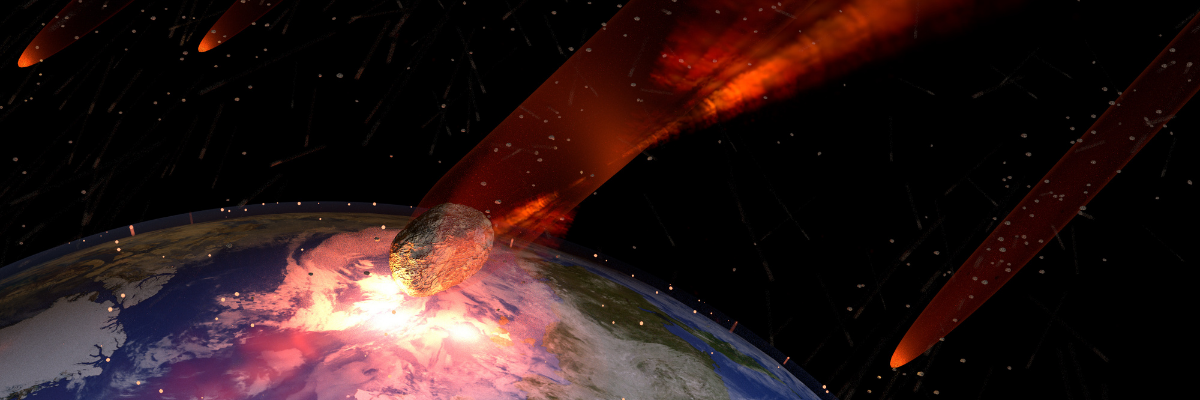
Imagine a giant space rock hurtling towards Earth. It sounds like a movie plot, right? But the truth is, asteroids are a real threat, and while the chances of a catastrophic impact in our lifetime are slim, the potential consequences are so severe that we absolutely need to be prepared. So, how do we protect our pale blue dot from these celestial wanderers? Let’s dive in and explore the amazing (and slightly terrifying) world of planetary defense!
First Things First: What Are We Even Talking About? (Asteroid Basics)
Before we can start thinking about deflecting asteroids, it’s important to understand what they are. Asteroids are rocky remnants from the early solar system, leftovers that never coalesced into planets. They hang out mostly in the asteroid belt between Mars and Jupiter, but occasionally, some wander into Earth’s neighborhood, becoming what we call Near-Earth Objects (NEOs).
- Size Matters: Asteroids range in size from just a few feet across to hundreds of miles. The bigger they are, the bigger the impact (literally!).
- Composition Counts: Some asteroids are mostly rock, while others are metallic. This affects how they respond to deflection methods.
- Orbit is Everything: Knowing an asteroid’s orbit is crucial for predicting potential impacts and planning a defense strategy.
Okay, So How Do We Find These Space Rocks in the First Place?
You can’t defend against something you can’t see! That’s where asteroid detection programs come in. Think of them as our cosmic early warning system.
- Ground-Based Telescopes: These powerful telescopes scan the night sky, looking for faint, moving objects that could be asteroids. They’re particularly good at spotting larger asteroids.
- Space-Based Telescopes: Putting telescopes in space gives us a clearer view, unhampered by Earth’s atmosphere. They’re especially useful for finding smaller, more distant asteroids that ground-based telescopes might miss.
- The Power of Collaboration: Many countries and organizations are involved in asteroid detection, sharing data and resources to create a more comprehensive picture of the NEO population.
Fun Fact: NASA’s Center for Near Earth Object Studies (CNEOS) is a key player in this effort, constantly tracking and analyzing the orbits of NEOs.
We Found One! Now What? Assessing the Threat Level
Finding an asteroid is just the first step. We need to figure out if it poses a real threat to Earth. This involves calculating its orbit, determining its size and composition, and predicting its future trajectory.
- Orbit Determination: Scientists use observations of the asteroid’s position over time to calculate its orbit. The more observations, the more accurate the orbit determination.
- Impact Probability: Based on the orbit, scientists can calculate the probability of the asteroid impacting Earth. This is usually expressed as a percentage.
- The Palermo Scale: This scale rates the potential impact risk of NEOs, taking into account the impact probability and the potential consequences of an impact.
Time to Get Defensive! Asteroid Deflection Techniques
So, we’ve found a potentially hazardous asteroid. What can we do about it? Thankfully, scientists are working on several deflection techniques, each with its own strengths and weaknesses.
Kinetic Impactor: This is like a cosmic game of pool. We send a spacecraft to collide with the asteroid, changing its velocity and nudging it onto a safer trajectory. This method is relatively simple and well-understood.
- Think of it like: Bumping a billiard ball to change its course.
Gravity Tractor: This is a more gentle approach. A spacecraft hovers near the asteroid, using its gravity to slowly tug it onto a different path. This method is slower but more precise.
- Think of it like: Gently guiding a boat with a tugboat.
Nuclear Deflection: This is the most controversial option, and hopefully, one we’ll never have to use. It involves detonating a nuclear device near the asteroid to vaporize part of its surface and create a rocket-like effect. This method is potentially very effective, but also raises concerns about radioactive contamination and the possibility of fragmenting the asteroid into multiple, smaller, but still dangerous, pieces.
- Think of it like: Using a powerful explosion to push the asteroid off course.
Laser Ablation: This involves using powerful lasers to vaporize the asteroid’s surface, creating a thrust that gradually changes its orbit. This method is still in the early stages of development, but it has the potential to be a very precise and controlled way to deflect asteroids.
- Think of it like: Using a laser beam to slowly erode the asteroid’s surface.
Ion Beam Deflection: This method uses a focused beam of ions to impart momentum to the asteroid. Like laser ablation, it’s a more futuristic approach that requires significant technological advancements.
- Think of it like: Using a powerful stream of particles to push the asteroid.
Important Note: The best deflection method will depend on the size, composition, and orbit of the asteroid, as well as the amount of warning time we have.
Practice Makes Perfect: Testing Deflection Technologies
We can’t just wait for a real threat to test these deflection techniques. That’s why space agencies like NASA and ESA are conducting missions to test these technologies in real-world scenarios.
- DART (Double Asteroid Redirection Test): NASA’s DART mission successfully impacted the asteroid Dimorphos in 2022, demonstrating the effectiveness of the kinetic impactor technique. This was a major milestone in planetary defense.
- Hera Mission: ESA’s Hera mission is following up on DART, studying Dimorphos in detail to better understand the effects of the impact.
The Legal Stuff: International Cooperation and Asteroid Defense
Asteroid defense is a global challenge that requires international cooperation. No single country can tackle this threat alone.
- United Nations Involvement: The United Nations Committee on the Peaceful Uses of Outer Space (COPUOS) is working to develop international guidelines and protocols for asteroid defense.
- Information Sharing: Sharing data and expertise between countries is crucial for effective asteroid detection and deflection.
- Decision-Making Processes: Establishing clear decision-making processes for responding to a potential asteroid impact is essential to avoid confusion and delays.
What Can You Do to Help (Besides Duck and Cover)?
While you might not be building spacecraft or calculating asteroid orbits, there are still ways you can contribute to planetary defense:
- Stay Informed: Follow news and updates from space agencies like NASA and ESA.
- Support STEM Education: Encourage young people to pursue careers in science, technology, engineering, and mathematics.
- Advocate for Planetary Defense: Let your elected officials know that you support funding for asteroid detection and deflection programs.
Frequently Asked Questions (Because We Know You Have Them!)
- How often do asteroids hit Earth? Small asteroids hit Earth frequently, but larger, potentially dangerous asteroids are much rarer.
- What happens if a big asteroid hits Earth? The consequences would depend on the size of the asteroid, but a large impact could cause widespread devastation, including tsunamis, earthquakes, and climate change.
- Can we destroy an asteroid with a nuke? While possible, it’s generally considered a last resort due to the risks of fragmentation and radioactive contamination. Deflection is preferred.
- How much warning would we have before an asteroid impact? It depends on the size and orbit of the asteroid. We might have years, months, or even just weeks of warning.
- Is there anything I can do to protect myself from an asteroid impact? The best thing you can do is stay informed and support efforts to detect and deflect asteroids.
The Future is Bright (and Hopefully Asteroid-Free!)
Protecting Earth from asteroid threats is a complex and ongoing challenge, but it’s one that we can meet with dedication, innovation, and international cooperation. By investing in asteroid detection, developing deflection technologies, and working together as a global community, we can ensure a safe and secure future for generations to come. Let’s keep our eyes on the skies and work to keep those pesky space rocks at bay!