
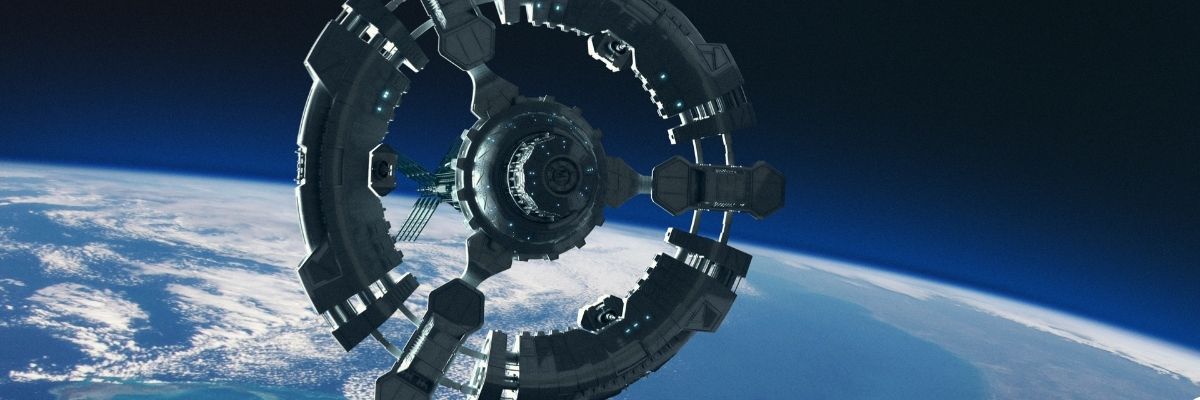
The cosmos, once the exclusive domain of science fiction and government-funded agencies, is now a vibrant frontier of innovation, buzzing with revolutionary ideas that are rapidly transforming how we explore, live, and work beyond Earth. This isn’t just about faster rockets or bigger telescopes anymore; it’s about a complete paradigm shift, driven by ingenious minds and cutting-edge technology that promises to unlock unprecedented opportunities and reshape our understanding of what’s possible in the vast expanse above us. These advancements aren’t merely theoretical; they are actively being developed and deployed, laying the groundwork for humanity’s next giant leap into the stars.
Getting Off This Rock Just Got a Whole Lot Smarter
For decades, getting anything into space was incredibly expensive and often a one-way trip for the hardware itself. But that’s changing dramatically, thanks to some truly groundbreaking approaches to space launch.
Reusable Rockets: The Game-Changer We Needed
Remember how airplanes land and get used again? That’s the idea behind reusable rockets, and it’s arguably the single biggest innovation driving down the cost of space access. Companies like SpaceX have perfected the art of landing their booster rockets upright, ready for another flight. This isn’t just a neat trick; it slashes launch costs by reducing the need to build entirely new rockets for every mission.
- How it works: After launch, the first stage of the rocket separates, re-orients itself, and uses its engines to perform a controlled descent and vertical landing, either back at the launch site or on an autonomous drone ship at sea.
- The impact: More frequent launches, cheaper access for satellites, and a clear path for future human spaceflight missions.
Beyond Chemical Fuel: Next-Gen Propulsion Systems
While reusable rockets handle the heavy lifting of getting off Earth, what about traveling through space? Traditional chemical rockets are powerful but inefficient for long journeys. Enter the next generation of propulsion:
- Ion Propulsion: Imagine a gentle, continuous push rather than a massive blast. Ion engines work by accelerating electrically charged atoms (ions) to incredibly high speeds, creating a small but persistent thrust. This is perfect for long-duration missions to distant planets or asteroids, where efficiency trumps raw speed.
- Nuclear Propulsion: This is where things get truly exciting for deep-space travel. Both nuclear thermal propulsion (NTP) and nuclear electric propulsion (NEP) are being explored. NTP uses a nuclear reactor to heat a propellant (like hydrogen) to extreme temperatures, expelling it for thrust, potentially cutting travel times to Mars by half. NEP uses a nuclear reactor to generate electricity, which then powers electric thrusters (like ion engines), offering incredible efficiency for extended missions. These technologies are crucial for making human voyages to Mars and beyond a realistic prospect.
Making Space Our Second Home: Building and Living Off-World
As we venture further, simply visiting space isn’t enough. We need to figure out how to live and work there sustainably. This involves everything from building structures to finding resources.
In-Space Manufacturing and 3D Printing
Sending every single tool or component from Earth is expensive and impractical. The solution? Make things in space!
- 3D Printing in Zero-G: Imagine printing a new wrench, a satellite component, or even parts of a habitat directly on a space station or lunar base. This technology allows for on-demand production, reduced launch mass, and the ability to create complex shapes impossible to manufacture on Earth.
- Automated Construction: Future visions include robotic systems that can assemble large structures in orbit, like massive telescopes or solar power arrays, without human intervention. This could revolutionize how we build everything from space stations to interplanetary vehicles.
Utilizing Space Resources (ISRU)
Why bring water or building materials from Earth when they might be available elsewhere? In-Situ Resource Utilization (ISRU) is all about “living off the land” in space.
- Lunar Ice: The discovery of water ice at the moon’s poles is a game-changer. This ice can be processed into drinking water, breathable oxygen, and rocket fuel (hydrogen and oxygen). This would drastically reduce the cost and complexity of establishing a permanent lunar presence.
- Asteroid Mining: Asteroids are rich in valuable metals like platinum, nickel, and iron. While still largely conceptual, the ability to mine these resources could fuel a space economy and provide materials for construction far beyond Earth.
Eyes on the Cosmos: Unlocking New Cosmic Secrets
Our ability to observe the universe has always been limited by Earth’s atmosphere. Putting advanced observatories in space is like giving humanity a superpower.
Next-Generation Space Telescopes
The James Webb Space Telescope (JWST) has already revolutionized astronomy, but the next generation promises even more incredible insights.
- Larger Apertures: Future telescopes will feature even bigger mirrors, potentially assembled in space, allowing them to collect more light and see fainter, more distant objects.
- Advanced Spectroscopy: New instruments will be able to analyze the light from exoplanets with unprecedented detail, helping us search for biosignatures (signs of life) in their atmospheres.
- Gravitational Wave Detectors in Space: Imagine observatories designed not to see light, but to detect the ripples in spacetime caused by cataclysmic cosmic events like black hole mergers. These could open an entirely new window into the universe.
Satellite Constellations for Earth Observation
Beyond gazing at distant galaxies, satellites are also transforming how we understand our own planet.
- Hyper-Spectral Imaging: These satellites can collect data across hundreds of spectral bands, providing unparalleled detail about Earth’s surface, from crop health and deforestation to mineral composition and pollution levels.
- Real-time Monitoring: Massive constellations of smaller, cheaper satellites offer near-constant global coverage, providing critical data for climate monitoring, disaster response, and urban planning.
Tidying Up Orbit: Tackling Space Junk
With so much activity in space, Earth’s orbit is becoming increasingly crowded with defunct satellites and rocket fragments – what we call space junk. This poses a significant threat to active spacecraft.
Active Debris Removal (ADR)
This isn’t just about avoiding collisions; it’s about actively cleaning up space.
- Harpoons and Nets: Concepts include spacecraft equipped with harpoons to snag larger debris or nets to capture smaller pieces.
- Robotic Arms: Specialized robotic arms could grapple defunct satellites and either de-orbit them (causing them to burn up harmlessly in the atmosphere) or move them to “graveyard orbits.”
- Laser Ablation: Some futuristic ideas involve using ground-based or space-based lasers to gently nudge debris into lower orbits where it will naturally decay.
Space Traffic Management (STM)
Just like air traffic control on Earth, we need a robust system for managing the ever-growing number of objects in orbit.
- Advanced Tracking Systems: Better radar and optical telescopes are being developed to track even tiny pieces of debris.
- Automated Collision Avoidance: AI and machine learning are being deployed to predict potential collisions and recommend orbital maneuvers to avoid them, ensuring the safety of critical space assets.
The Martian Frontier and Beyond: Our Next Giant Leaps
The dream of humans on Mars, and eventually other celestial bodies, is closer than ever, thanks to these innovations.
Advanced Life Support Systems
Long-duration missions require closed-loop life support systems that can recycle air, water, and waste with extreme efficiency, minimizing the need for resupply from Earth. Think of it as a tiny, self-sustaining ecosystem.
Radiation Shielding
Deep space is bathed in dangerous radiation. New materials and active magnetic shielding technologies are being developed to protect astronauts and sensitive equipment from harmful cosmic rays and solar flares, making extended stays beyond Earth’s protective magnetosphere possible.
Faster, More Efficient Interplanetary Travel
While nuclear propulsion is a major contender, other concepts like solar sails are also being explored. These massive, ultra-thin membranes use the tiny pressure of sunlight photons to propel spacecraft, offering a fuel-free way to travel, albeit slowly at first.
Powering Our Space Dreams: Energy Solutions for the Cosmos
Everything we do in space requires power, and traditional solar panels have their limits, especially for missions far from the sun or on shadowed planetary surfaces.
Advanced Solar Power
- More Efficient Cells: Research continues into solar cells that can convert sunlight into electricity with greater efficiency, even in harsher radiation environments.
- Space-Based Solar Power (SBSP): A truly ambitious concept involves deploying massive solar arrays in Earth orbit to capture sunlight 24/7, then wirelessly beaming that energy down to Earth. This could provide a clean, constant source of renewable energy.
Radioisotope Thermoelectric Generators (RTGs)
For missions to the outer solar system where sunlight is scarce, RTGs remain crucial. These devices convert the heat from the natural decay of radioactive material into electricity, providing a reliable power source for decades, as seen on probes like Voyager and Curiosity.
Frequently Asked Questions
What’s the biggest challenge in space innovation right now?
One of the biggest challenges is making space access and operations more affordable and sustainable, balancing ambition with practical economics and environmental responsibility.
How soon will average people be able to travel to space?
Space tourism is already a reality, but widespread, affordable access for “average people” is still likely decades away, requiring significant further cost reduction and safety advancements.
Is space mining really possible, or is it just science fiction?
Space mining is definitely possible, especially for water ice on the Moon or asteroids; the main hurdle is developing the economic and technological infrastructure to make it profitable.
How do we prevent space junk from becoming an even bigger problem?
Preventing future space junk involves stricter regulations on satellite disposal and active debris removal technologies to clean up existing defunct objects.
What’s the most exciting new space technology on the horizon?
Many experts point to advanced propulsion systems, like nuclear thermal propulsion, as the most exciting due to their potential to drastically reduce interplanetary travel times.
The Future is Now
The pace of space innovation is staggering, driven by a blend of public and private sector ambition. These cutting-edge concepts aren’t just improving our space capabilities; they are fundamentally redefining humanity’s relationship with the cosmos, paving the way for a future where space is not just observed, but inhabited and utilized for the benefit of all. Embracing these innovations is crucial for unlocking a new era of scientific discovery, economic growth, and ultimately, ensuring the long-term resilience of our species.